
Tutorial: Stepwise Sequencing of Lymph Drainage, Kinesio Taping, and Tissue Mobilization is a practical approach for postoperative care that integrates gentle lymph flow, supportive taping, and targeted tissue mobilization to reduce swelling, improve mobility, and support recovery.
This guide is designed for individuals transitioning from a recent procedure to everyday activity, with an emphasis on safe, evidence-informed practices.
You’ll find practical steps, simple assessments, and real-world examples drawn from professionals in massage and bodywork who frequently support clients during the early stages of postoperative rehabilitation.
Throughout, lymph drainage, edema control, tissue mobility, and postoperative care are woven together to create a cohesive sequence that emphasizes comfort, safety, and gradual progression.
Why this stepwise sequencing matters for postoperative rehab
The core idea behind this method is to harmonize three complementary modalities to support edema control and soft tissue mobility without overwhelming the body.
By sequencing lymph drainage, taping, and tissue mobilization in a deliberate order, clinicians and caregivers can help improve venous return, reduce swelling, and restore comfortable movement.
Foundational concepts: lymph drainage and edema management
Understanding the lymphatic system and its role in postoperative recovery helps you tailor gentle manual techniques and monitoring cues.
Lymph drainage aims to encourage fluid movement away from congested areas, which in turn improves tissue perfusion and comfort.
Recent discussions in wellness science emphasize that early, light applications can support faster recovery without overloading tissues.
- Light, rhythmic strokes aligned with natural lymph pathways
- Gradual progression to deeper touch only as tolerance increases
- Consistent breath and comfortable positioning to reduce guarding
Kinesio Taping: role in edema control and proprioceptive support
Kinesio taping is used to support tissue alignment and help manage swelling.
The goal is to provide light mechanical support that does not restrict movement or sensation.
For many clients, strategic taping contributes to improved comfort and more confident, measured activity during daily tasks.
- Skin preparation and clean, dry surfaces before application
- Pattern choices tailored to location and degree of swelling
- Monitoring for irritation or changes in skin tolerance
Tissue mobilization: restoring fascial glide and scar mobility
Gentle tissue mobilization focuses on improving fascia mobility and reducing adhesions that can restrict movement.
The aim is to reestablish smooth tissue glide without provoking discomfort.
This approach aligns with current best practices in postprocedural rehabilitation that prioritize patient comfort and functional progression.
- Light, non-painful mobilizations to address stiffness
- Progressive scar mobilization as healing allows
- Integration with breathing to sustain natural tissue movement
Step 1: Preparing the body for lymph drainage
Preparation sets the stage for a safe and effective sequence.
In this stage you’ll create a comfortable environment, assess readiness, and establish a baseline for progression.
The aim is to minimize risk while maximizing the positive effects of the subsequent steps.
Assessment and safe starting points
Start with a brief check on comfort, posture, and range of motion.
Note any areas of heightened sensitivity or recent discomfort.
Use gentle warmth and calm surroundings to help the body relax.
If a client reports persistent pain or significant redness, adjust intensity and postpone deeper work.
- Observe posture and ease of movement in simple tasks
- Ask about comfort levels and tolerances before touching
- Document any swelling patterns or changes over time
Positioning and comfort
Positioning supports drainage and reduces strain on the body.
Elevation, where appropriate, can assist venous return and swelling management.
Avoid positions that compress the treated areas and always prioritize comfort over ambition.
- Elevate affected limbs as advised by your clinician
- Use supportive cushions to reduce pressure points
- Adjust clothing and straps to avoid constriction
Gentle warm-up routines
A light warm-up can prepare tissues for the upcoming techniques, improving circulation and comfort.
Consider subtle, non-fatiguing movements that awaken breath, reduce stiffness, and promote a relaxed state.
- Slow, diaphragmatic breathing to encourage flow
- Gentle arm/leg movements within tolerance
- Short, relaxed sessions to avoid fatigue
Step 2: Performing lymph drainage techniques
In this step you’ll apply light, directional movements designed to stimulate the lymphatic system without provoking irritation.
The emphasis is on staying within the client’s comfort zone while guiding fluid movement away from congested areas toward drainage points.
Light strokes and directions
Use soft pressure that never causes pain.
Follow established lymph pathways and avoid deep pressure.
The sequence should feel soothing, almost like a massage that hums with a gentle rhythm.
This approach supports edema reduction and enhances overall comfort.
- Begin with proximal-to-distal strokes in a gentle tempo
- Avoid dragging tissue or applying sustained heavy pressure
- Coordinate with breath to optimize fluid dynamics
Manual lymph drainage sequences
Structured sequences help standardize practice while allowing for personalization.
Typical patterns target the limb or region most affected by swelling, followed by central drainage toward lymph nodes and natural drainage corridors.
- Sequence templates that adapt to different postoperative areas
- Alternating light, rhythmic motions to maintain calm
- Pause points to reassess tolerance and comfort
Contraindications and safety reminders
Keep safety at the forefront.
If swelling is accompanied by fever, red streaks, or severe pain, stop and seek professional guidance.
The guiding principle is to stay within tolerable limits and not exceed the body’s current healing pace.
- Avoid areas with open wounds or irritated skin
- Discontinue if there is numbness or unusual tingling
- Coordinate with a clinician when in doubt about intensity
Step 3: Applying Kinesio Taping effectively
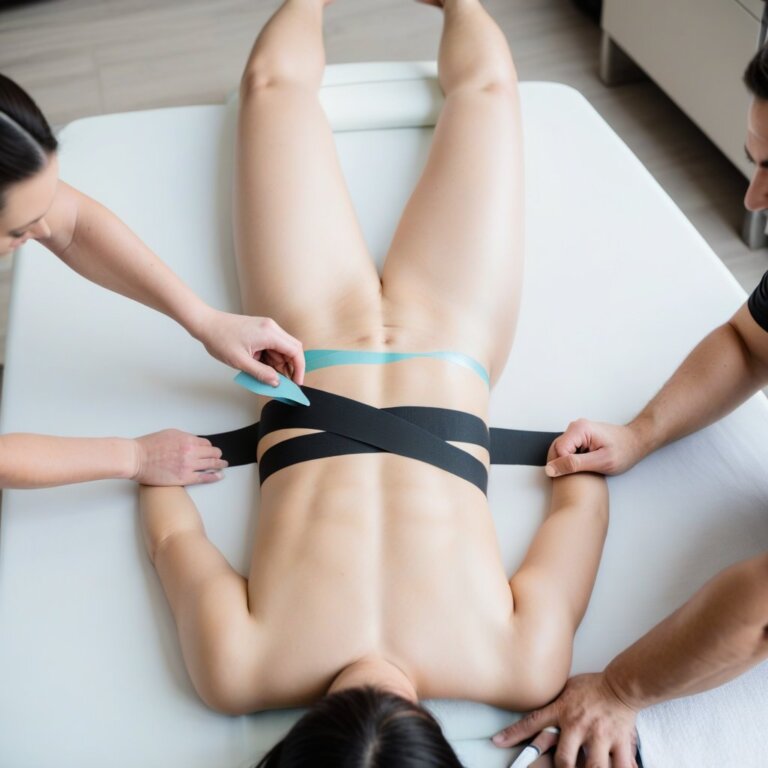
Taping is used to support tissue alignment and edema management while allowing comfortable movement.
The goal is to provide light, nonrestrictive support that aids natural function without creating added tension on healing tissues.
Tape selection and skin prep
Choose tapes with skin-friendly materials and ensure the skin is clean, dry, and free of lotions.
Patch testing a small area can help detect sensitivity before applying larger patterns.
The right tape and preparation set the stage for reliable results and improved comfort.
- Opt for hypoallergenic tape when possible
- Skin preparation matters for adherence and comfort
- Educate on how to monitor for irritation post-application
Taping patterns for common postoperative sites
Pattern selection depends on the location and the goal—edema reduction, support, or scar mobility.
Patterns should be simple, repeatable, and easy to remove if discomfort arises.
Use light tension and avoid placing tape over sensitive or inflamed areas.
- Paraspinal and limb patterns that encourage drainage
- Scar-focused patterns to improve mobility and tissue glide
- Check-ins to adjust the patterns as healing progresses
Monitoring and aftercare
Post-application monitoring ensures you stay within safe and comfortable limits.
Keep the skin dry, avoid tanning beds during tape wear, and remove tape if irritation appears.
Record how changes in taping influence comfort and swelling for future planning.
- Track skin response and comfort over 24–72 hours
- Schedule a follow-up check to adjust taping as needed
- Document any improvement in movement or swelling tone
Step 4: Tissue mobilization and scar work
Gentle tissue mobilization aims to restore smooth tissue glide, improve scar mobility, and reduce stiffness that can accompany a post-procedure recovery.
Approaches prioritize safety and gradual progression, aligning with best practices for soft tissue care.
Myofascial release basics
Begin with light, slow exploration of restrictions and fascial planes.
The emphasis is on recognizing tissue tension and gently guiding it toward a more balanced state.
Expect a calm, soothing response rather than harsh pressure.
- Identify areas of restricted movement and treat gently
- Use light, directional pressure to encourage glide
- Coordinate with breathing to enhance relaxation
Gentle scar mobilization technique
Scar work helps normalize tissue rhythm and improves adaptability for everyday motions.
Start with superficial contact and progressively introduce more subtle mobilization as tolerance grows.
This practice supports long-term tissue health and functional recovery.
- Start with light contact parallel to the scar
- Gradually explore perpendicular directions as allowed
- Monitor for redness, warmth, or discomfort and adjust accordingly
When to pause and revisit
Delaying aggressive work allows healing to advance.
If you notice increased swelling, pain, or skin changes, pause and reassess before resuming.
Returning to foundational steps can often restore confidence and safety in the sequence.
- Set clear tolerance thresholds for each session
- Document progress and any setbacks
- Revisit earlier steps to reinforce comfort and stability
Case examples and practical outcomes
Real-world cases illustrate how a structured, stepwise approach can support integrated rehab goals.
These narratives reflect practical application, careful progression, and measured improvements in daily function.
Case A: abdominal region integrated rehab
In this case, a client pursuing a postoperative recovery focused on reducing abdominal swelling while maintaining comfortable mobility.
The combination of careful lymph drainage, taping around the abdomen, and gentle tissue mobilization helped reduce stiffness and supported a more confident return to daily activities.
The emphasis on Integrated Abdominal Rehab highlights how an integrated plan can affect multiple tissue planes in a cohesive way.
- Reduced perceived fullness and improved skin mobility
- Enhanced comfort during gentle movements and transitions
- Clear progression from light touch to more confident activity
Case B: knee region post-procedural rehab
A second case demonstrates the benefits of sequencing for a lower-extremity region.
Light drainage work, a targeted taping pattern, and cautious tissue mobilization supported swelling reduction and encouraged gradual restoration of range of motion.
The approach emphasizes patient-centered pacing and ongoing assessment to stay within tolerance.
- Swelling control with improved limb contour
- Better tolerance for everyday tasks like walking short distances
- A plan that scales as healing advances
Data trends in 2026
As we move through 2026, wellness professionals increasingly recognize the value of coordinated modalities for postoperative rehabilitation.
Studies and expert reviews point toward improvements in edema management and functional recovery when lymph drainage, taping, and tissue mobilization are combined in a thoughtful sequence.
Clinicians emphasize patient safety, comfort, and gradual progression as core pillars of success.
- Growing adoption of stepwise sequencing in well-being clinics
- Emphasis on noninvasive approaches that respect tissue healing timelines
- Continued emphasis on education and self-care for ongoing recovery
Practical tips for clinicians and at-home caregivers
Whether you’re a clinician facilitating care or a caregiver supporting someone at home, these practical tips help ensure the sequence remains safe, engaging, and effective in everyday life.
The goal is to empower continuity of care between sessions while maintaining a calm, restorative environment.
Documentation, safety, and patient education
Thorough notes about tolerance, progress, and any changes in swelling can help tailor future sessions.
Use clear language to describe what was done, how it felt, and what to monitor at home.
Simple education about pacing and recognizing signs that require professional guidance can improve confidence and outcomes.
- Record tolerance levels and comfort ratings after each session
- Provide simple home-care instructions aligned with the sequence
- Encourage open communication about sensations and daily activities
Integrating with other modalities
The sequencing works best when combined with mindful movement, breathing, and gentle stretching that are appropriate for recovery.
Integrating these elements into a daily routine can promote better outcomes and a smoother transition back to regular activities.
- Coordinate with lightweight, enjoyable activities
- Balance rest with movement to avoid fatigue
- Maintain consistency to reinforce progress
Scheduling your integrated rehab plan
Structured scheduling helps ensure steady advancement.
A sensible plan includes short sessions with clear progression, built-in rest, and routine reviews to adjust intensity and focus as healing progresses.
Consistency, patience, and attention to the body’s signals are essential.
- Plan short, focused sessions several times per week
- Adjust frequency based on tolerance and response
- Reassess goals regularly to stay aligned with recovery pace
Next steps and gentle encouragement to explore integrated care
By embracing a thoughtful, stepwise sequence, you can support edema control, tissue mobility, and overall comfort during postoperative recovery.
The approach described here is practical for home care and clinical settings alike, with an emphasis on safety, patient education, and compassionate care.
If you’re seeking a trusted, evidence-informed destination for integrated postprocedural care in Massachusetts, consider the skilled team at Best & Beyond Spa, where experienced professionals blend high-quality massage, skin rejuvenation, and wellness expertise to support your journey back to daily life.
Whether you’re recovering from a procedure already or preparing for recovery, the key is to proceed calmly, listen to your body, and use a sequenced approach that respects tissue healing timelines.
Soft tissue work, mindful breathing, and gentle taping can work together to support your comfort and function, day by day.
Ready to explore how Tutorial: Stepwise Sequencing of Lymph Drainage, Kinesio Taping, and Tissue Mobilization can fit into your postoperative routine? Learn more about our integrated programs at Best & Beyond Spa in Massachusetts, where a renowned team of specialists is dedicated to providing calm, evidence-informed care in a nurturing environment.
Frequently Asked Questions
What is the Stepwise Sequencing of Lymph Drainage, Kinesio Taping, and Tissue Mobilization, and who can benefit from it?
This approach combines gentle lymph drainage, supportive Kinesio Taping, and careful tissue mobilization in a deliberate order to support edema control and soft tissue mobility after surgery. It targets individuals transitioning from postoperative care to daily activities, emphasizing safety, comfort, and gradual progression. It provides a practical framework for postoperative rehab without overwhelming the system.
How does lymph drainage contribute to edema management after surgery?
Lymph drainage helps redirect interstitial fluid away from swollen areas, improving tissue perfusion and comfort. Techniques are light and rhythmic, following natural lymph pathways, and they progress only as tolerance allows. Monitor for excessive swelling or new pain and adjust pace accordingly.
When is kinesio taping appropriate in postoperative edema control, and what should I expect?
Kinesio Taping provides proprioceptive support and can aid venous return when edema is present, typically after initial drainage has begun. A clinician should apply tape along lymphatic patterns suitable to your area, and wear time varies by patient and procedure. Skin checks for irritation and loosening are important, and remove or adjust if discomfort occurs.
What role does tissue mobilization play in this sequence, and how is it safely implemented?
Tissue mobilization targets soft tissue mobility and scar tissue remodeling, complementing drainage and taping. Techniques are performed with a light touch and progress in depth as tolerance allows, keeping you comfortable and relaxed. Synchronizing breath with touch helps reduce guarding and improve ease of movement.
What signs indicate the sequence is progressing well in postoperative rehab?
Indicators include decreasing swelling, easier movement, and less muscular guarding. You should notice improved range of motion and more comfortable daily activities, with pain staying within a tolerable range. If swelling worsens or pain spikes, consult your clinician to reassess the plan.
What common mistakes should be avoided when applying this stepwise sequence?
Avoid rushing progression or applying deep pressure too soon, which can overwhelm healing tissues. Don’t skip lymph drainage sessions, ignore body feedback, or misuse taping (leading to skin irritation). Refrain from applying these techniques if there are signs of infection or other contraindications.
How can this sequence be adapted for different body areas or procedures?
Adapt patterns to the affected region, considering edema distribution and tissue sensitivity. Start with lighter interventions and gradually adjust pacing, depth, and tape application based on tolerance and healing progress. Coordinate with a clinician to tailor the approach for your specific surgery.
How should progress be tracked during postoperative rehab using this method?
Use simple, repeatable assessments such as edema measurements, range of motion, pain scales, and functional milestones. Keep a brief log to observe trends over time and share updates with your care provider. Regular monitoring helps ensure the sequence remains safe and effective for your recovery.

At Best and Beyond Spa, Day and Davilla are dedicated professionals passionate about wellness and beauty. With expertise in spa day treatments, couples massages, and senior wellness, they provide high-quality, personalized care in a relaxing environment. Their mission is to help clients feel rejuvenated, refreshed, and truly cared for.
Related Posts

Comparative: Early Lymphatic Care vs Standard Care for Fibrosis Reduction in the Immediate Abdomen
List: Core Steps for Early Tissue Mobilization to Prevent Fibrosis