Tutorial: Safe Kinesio Taping Practices to Support Postoperative Abdominal Mobility
early-abdominal-rehab is a concept that guides safe, gradual movement after abdominal procedures, emphasizing gentle progression, controlled breathing, and functional activity to support mobility without strain.
In this tutorial, we’ll explore how to use kinesio taping responsibly to complement a recovery plan designed by your care team.
This guide is crafted for people who recently underwent abdominal procedures or expect to, and for those assisting their loved ones.
You’ll learn practical steps, safety considerations, and how to integrate tape with gentle movement, posture, and core activation to nurture confidence and resilience.
Our approach blends evidence-informed practices with the warm, professional care you’d expect from Best & Beyond Spa in Massachusetts, where massage, wellness, and supportive therapies converge to promote holistic well-being.
We rely on the expertise of our wellness professionals and physiotherapy-informed strategies to tailor advice to different recovery stages, ensuring you can regain mobility with comfort and control.
By the end, you’ll have a practical, non-medical framework you can discuss with your healthcare team to support early-abdominal-rehab goals.
What kinesio taping offers for early-abdominal-rehab and safe mobility
In the world of post-procedure care, kinesio taping is used as a lightweight support strategy designed to encourage comfortable movement, support skin integrity, and enhance proprioception without restricting activity.
While it is not a substitute for medical guidance, it can be a practical adjunct within a broader, holistic approach to recovery.
This section outlines the why behind kinesio taping in the context of early-abdominal-rehab, the who can consider it, and the when it fits best, all framed through the lens of our Massachusetts-based wellness team.
You’ll notice practical takeaways, backed by real-world experiences from our spa family, and anchored in a patient-centered, nonclinical tone designed to empower rather than overwhelm.
Understanding the science in plain terms
Tapelike support, when applied correctly, can help control minor swelling, support the skin and superficial tissues, and provide sensory cues that aid posture and safe movement.
In early-rehab stages, these cues may foster proprioception, balance, and confidence as you initiate gentle activities.
Recent industry discussions and studies indicate that properly applied elastic tapes can assist with sensation and comfort without adding significant load to the abdomen, making them a practical addition to a careful mobility plan.
Our team emphasizes breathing coordination and core activation as foundational pieces of recovery, with taping serving as a supportive tool in those efforts.
The goal is steady, pain-free movement that supports functional tasks such as gentle trunk rotations, posture maintenance, and gradual increases in range of motion.
- Tapewear is lightweight and designed to move with your skin and muscles, not against them.
- Effectiveness tends to be individualized; some people notice immediate comfort, others report gradual benefits over days.
- Always monitor the skin under the tape for redness, itching, or irritation, and remove if irritation occurs.
In our Massachusetts wellness practice, we integrate kinesio taping with massage-based release techniques and breathing exercises to support postoperative abdominal mobility in a non-invasive, person-centered way.
We emphasize communication with your healthcare provider and ensure that any home program respects your current stage of recovery, incision status, and overall energy levels.
The overarching idea is to pair gentle, deliberate movement with tactile support that helps you stay aligned and comfortable during daily activities.
early-abdominal-rehab Principles for Safe Mobility
Implementation of early-abdominal-rehab principles hinges on clear boundaries between activity that promotes recovery and activity that risks overexertion.
This section introduces the core principles and practical ways to apply them in daily life, supported by our spa team’s experience working with clients who are navigating post-procedure rehabilitation in the comfort of a relaxing, safe environment.
We’ll cover pacing, posture, and progressive exposure to movement that respects your body’s signals.
Milestones and pacing in early-abdominal-rehab
Recovery milestones in this context are practical and individualized.
A common approach is to start with small, gentle movements and gradually increase challenge as tolerance grows.
For many, this may involve daily sessions of breathing-focused activation, light trunk mobility, and controlled postural exercises.
The aim is to achieve functional independence with minimal discomfort while maintaining skin integrity and tissue health.
In our experience, clients who pace themselves—balanced between rest and movement—tend to experience steadier progression over the first weeks post-procedure.
We encourage documenting sensations, noting when movement feels easier, and adjusting activities accordingly.
Why posture and breathing matter in early rehab
Proper alignment and diaphragmatic breathing contribute to a more comfortable environment for the abdominal region during movement.
By training the breath to synchronize with low-level trunk activation, you can reduce unnecessary tension, minimize strain on incision areas, and support a stable ribcage and pelvis.
Our approach blends soft-tissue work from our massage-based services with gentle movement sequences that emphasize posture awareness and breath control.
This integration helps reinforce a stable core and a calm nervous system, which many clients find beneficial in the early stages of recovery.
- Posture-friendly habits (sitting tall, alternating between positions) reduce abdominal pressure and discomfort.
- Breathing-focused routines can be practiced anywhere, making recovery accessible outside of therapy sessions.
- Gentle trunk movements should be performed within comfort zones; never push through sharp pain.
Evidence and expert consensus in 2026 emphasize the value of patient-centered, multimodal approaches to early rehabilitation.
While kinesio taping is just one piece of the puzzle, it pairs well with the texture of a holistic plan that includes massage-informed strategies, gentle mobility, and mindful breathing.
The combination can contribute to a smoother return to daily activities while supporting a sense of control and confidence in one’s body.
Safety first: before applying kinesio tape post-procedure
Safety is the cornerstone of any home-based rehabilitation plan.
This section outlines essential precautions, eligibility considerations, and signs that indicate it’s time to pause or seek professional guidance.
We’re deliberately careful about language to keep this information accessible and non-clinical while staying true to best practices in post-procedure care.
The aim is to empower you to make informed choices with your care team, and to know when to seek additional input from a qualified wellness professional in Massachusetts.
Who should consider kinesio taping in early rehab
Most people who are past the initial healing phase and who can tolerate light touch and skin contact may consider taping as a supplementary aid for comfort and mobility.
However, eligibility is highly individual.
If you have any concerns about incision sites, unusual skin responses, or systemic symptoms, postpone taping and consult a qualified wellness practitioner who can assess skin integrity and provide customized guidance.
Our team prioritizes skin health, sensation, and comfort as the three pillars of a safe approach to taping.
In Massachusetts, our practitioners assess these factors during initial consults, tailoring recommendations to each client’s recovery trajectory.
What to monitor before and after applying tape
Before applying tape, ensure that:
- The skin is clean, dry, and free of rashes or open wounds near the tape site.
- There is no active inflammation or infection around the abdominal area.
- Incision sites are intact and not oozing or painful beyond a mild, expected level.
After applying tape, watch for the following signals.
If you notice any of these, remove the tape and seek guidance from your wellness professional:.
- Persistent redness beyond typical irritation, swelling, or heat around the tape.
- Increased pain, itching, or a burning sensation under or around the tape.
- Blistering, skin breakdown, or tape peeling away from the skin.
Our Massachusetts-based team emphasizes a careful, patient-first approach.
We recommend starting with shorter wear times and gradually increasing as you confirm skin tolerance and comfort.
This measured approach aligns with the larger goal of maintaining a balanced, recovery-oriented routine without introducing unnecessary stress on the abdominal region.
Choosing the right tape and materials for home use
Choosing the right materials is a practical step that can influence comfort, adhesion, and the overall experience of early rehab.
We’ll discuss tape types, accessories, skin-friendly practices, and how to adapt your kit to your recovery stage.
The emphasis is on safe, gentle, and simple tools that integrate with a broader plan of movement, breathing, and relaxation techniques available at Best & Beyond Spa.
Types of kinesio tape and their use in early rehab
Elastic kinesio tapes are designed to stretch with the skin, offering light support and sensory feedback.
For home use in an early rehab context, you’ll typically encounter two main forms:.
- Pre-cut, ready-to-use strips that simplify placement.
- Rolls that allow you to tailor length and tension for specific areas.
In our practice, we favor user-friendly options that minimize application complexity while maximizing skin comfort.
The goal is to ensure gentle support without constraining breathing, movement, or skin health.
A key principle is to maintain tension control and apply the tape with minimal stretch over areas requiring support, with more nuanced tension in areas where proprioceptive cues are most beneficial.
Skin prep and barrier tips
Proper skin preparation enhances adhesion and reduces irritation.
Wash the area with mild soap and water, rinse thoroughly, and let the skin dry completely before applying tape.
Avoid applying tape on irritated, sunburned, or freshly shaved skin.
Consider a protective barrier film if your skin tends to be sensitive, but test any barrier product on a small patch first to ensure compatibility.
Our team often recommends a light barrier layer to reduce moisture buildup beneath the tape, which can prolong wear time and keep the skin comfortable during daily activities.
Additionally, choose hypoallergenic tapes when possible, especially for those with sensitive skin or a history of dermatitis.
While tape choices vary, we emphasize simplicity and skin comfort, ensuring the material you select supports your comfort and recovery rather than complicating it.
Step-by-step: safe taping practices for abdominal mobility
A step-by-step guide helps you implement taping in a way that complements gentle movement, breathing, and daily activities.
We present a practical framework that you can adapt under the guidance of a qualified wellness professional.
The steps below are designed to be straightforward, with actionable detail while remaining mindful of the early stages of healing and the need for patient-specific customization.
Preparing the area and establishing placement
Begin with a calm, clean environment.
Sit or lie in a comfortable position that allows you to access the abdominal region without strain.
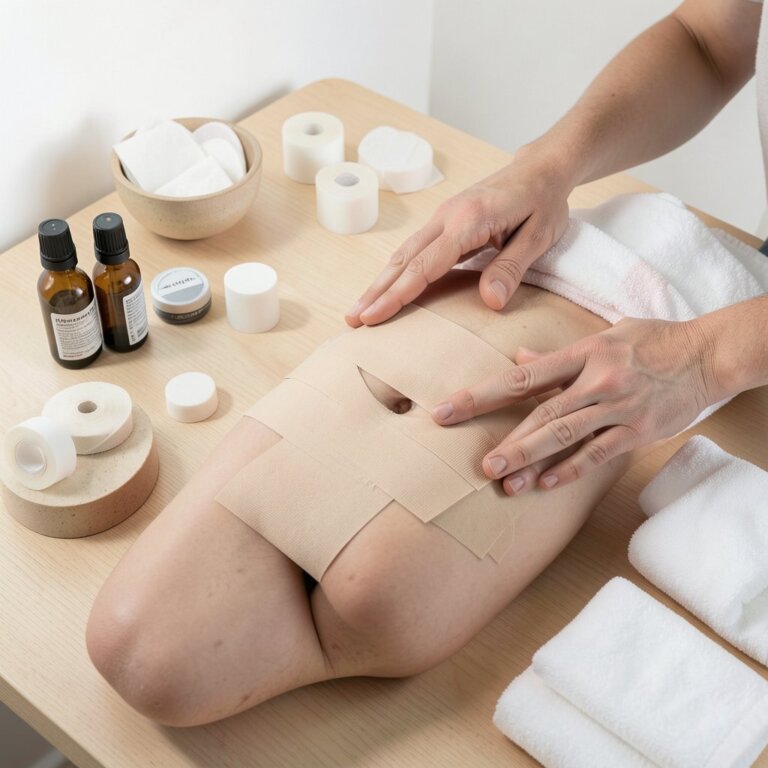
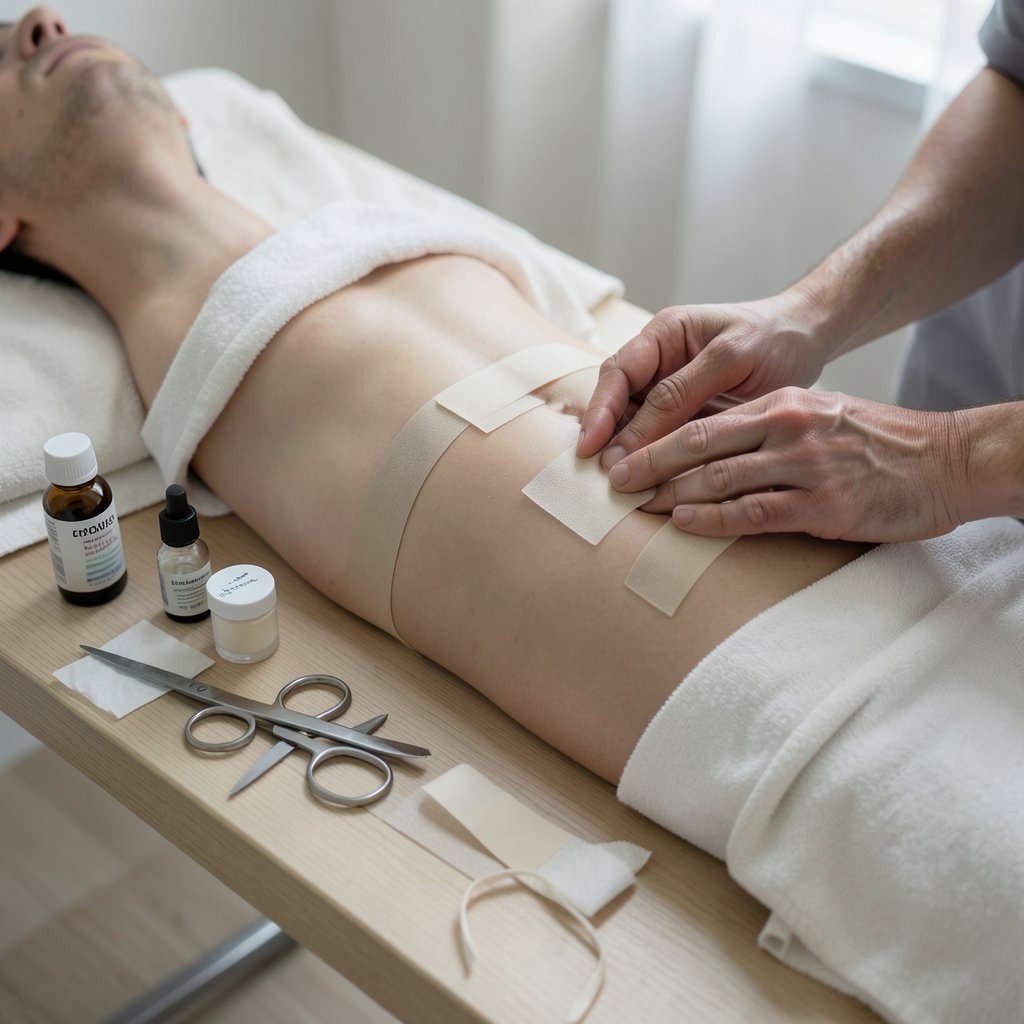
Apply tape to clean, dry skin according to basic placement principles.
Place tape along lines that support natural muscle directions, avoiding areas with incisions or open wounds.
The aim is to provide lightweight sensory feedback and support for safe movement, not to enforce a rigid posture or limit your natural range of motion.
Placement strategies for common abdominal regions
While placements are individualized, a few general strategies help guide safe use.
For example, you might apply gentle strips along the lower abdomen to support soft tissue and reduce awareness of discomfort during bedtime stretches or slow, controlled hip flexion.
Another approach is to place tape across the upper abdomen to encourage diaphragmatic breathing and rib cage expansion during gentle trunk rotations.
Always ensure that placement does not tug on incision lines or cause skin irritation.
Our team emphasizes a gradual, experience-based approach and adjustment based on your feedback and comfort levels.
Incorporate these placements with a short routine of breathing and light movement, such as seated ankle-to-knee stretches, slow pelvic tilts, and gentle trunk twists performed with mindful exhale.
The integration of tape, gentle movement, and breathing helps you stay aligned and minimize unnecessary abdominal pressure during early rehab.
Progression and when to remove or adjust tape
Begin with short wear times—perhaps 2–4 hours initially—and remove if you notice any skin or comfort concerns.
If you experience irritation or discomfort, consider removing the tape and allowing the skin to rest before trying again.
As you progress and tolerance improves, you can experiment with slightly longer wear times and more varied movement patterns, but always under the guidance of a wellness professional who can observe your response and adjust accordingly.
The goal is to support progress without provoking discomfort or adverse skin reactions.
- Keep the tape clean and dry; remove before sleeping if you’re not comfortable wearing it overnight.
- Track your comfort levels during daily activities to identify what placements and tensions work best.
- Document skin responses and movement gains to share with your care team for collaborative planning.
Common mistakes and how to fix them
Avoiding common missteps can help you stay on a safe, steady recovery track.
The following sections outline frequent errors and practical remedies that our wellness team observes in 2026 practice, with tips you can apply at home while remaining aligned with your personal healing trajectory.
Mistake #1: Tape too tight or too loose
Taping with excessive tension can cause discomfort and skin issues; too little tension may fail to provide the intended sensory cues.
The solution is to use a light-to-moderate tension, focusing on clean, smooth applications without pulling the skin aggressively.
If you sense dull or sharp pain after application, remove the tape and re-evaluate the placement and tension with a professional.
In our Massachusetts studio, we emphasize gentle testing: apply a small initial strip, assess comfort after a few minutes, and adjust as needed.
Mistake #2: Ignoring skin health and moisture
Moisture and sweat can affect adhesion and skin health.
If moisture is present, gently dry the area before resticking or replacing the tape.
Consider breathable fabrics during the day to help manage moisture.
Our team emphasizes skin checks as part of a routine, identifying signs of irritation early and adjusting the taping plan to protect skin integrity while supporting movement.
- Inspect skin for redness, itching, or heat under the tape daily.
- Use barrier films or hypoallergenic options if skin sensitivity is present.
- Take breaks as needed to prevent skin irritation during longer wear times.
Mistake #3: Over-reliance on tape without movement guidance
Taping should augment a movement plan, not replace it.
It’s essential to pair taping with guided, gentle exercises that promote mobility, breathing, and core activation.
Your wellness professional can help design a simple routine that reinforces safe patterns, including diaphragmatic breathing, light pelvic tilts, and controlled side bending within your comfort zone.
At Best & Beyond Spa, we often blend taping with hands-on techniques such as gentle tissue mobilization and breathing-focused sessions to optimize comfort and function.
This integrated approach helps translate the tactile support of tape into meaningful improvements in daily activities, posture, and confidence as you progress through early rehab.
Integrating taping with gentle movement and breathing exercises
Movement and breathing are inseparable partners in early rehab.
Taping can act as a tactile reminder to engage supportive postures and diaphragmatic breathing, while our movement sequences encourage tissue-friendly mobilization and real-world function.
The combination aims to reduce protective guarding, promote smoother ribcage and spine mechanics, and facilitate a gradual return to activities you enjoy—be it light stretching, walking, or everyday tasks.
Breathing-first sequences for abdominal comfort
Begin with slow, deliberate breaths that expand the lower ribs and abdomen evenly.
As you inhale, imagine the belly and sides of the torso gently expanding; as you exhale, allow a slow, complete release.
You can practice this seated or lying down, gradually expanding to upright positions as you feel comfortable.
The aim is coordinated breathing and gentle movement that support a smoother recovery without placing pressure on incisions or soft tissues.
Gentle mobility patterns that respect your stage
In this phase, focus on light trunk movements that do not strain incision areas.
Examples include gentle pelvic tilts, seated spinal twists with a relaxed neck, and small knee-to-chest stretches performed slowly during a calm breath cycle.
Pair these movements with the taping as a cue to maintain alignment.
Our team notes that these small steps, consistently practiced, can translate into meaningful gains over days and weeks, reducing stiffness and enhancing comfort during daily tasks.
- Daily routine: 5–10 minutes of breathing and mobility work.
- Alternate activity with short rest periods to avoid overfatigue.
- Keep sessions relaxed and enjoyable, reinforcing a positive recovery mindset.
Case studies and practical tips from our spa team
Our team has supported many clients in Massachusetts who sought a non-invasive, wellness-centered approach to early rehab.
While each journey is unique, some practical patterns emerge from real-life experiences that can inform your plan.
We share two concise case-style insights that highlight how taping, breathing, and gentle movement can align with personal recovery goals while respecting individual differences.
Case example A: An active professional returning to desk work
A client in their early 40s used a light taping protocol to support comfortable posture during long workdays.
The combination of placement along the lower abdomen, diaphragmatic breathing practice, and brief mobility breaks helped reduce perceived tightness during sitting and enabled a more confident return to desk tasks.
The client emphasized feeling better overall when combining tape with short,**breathing-focused breaks** throughout the day and light stretches in the morning.
This approach aligns with a broader early-abdominal-rehab strategy that prioritizes functional tasks and daily comfort.
Case example B: A weekend-warrior rebuilding core endurance
A physically active individual used a staged plan that involved taping to cue proper posture during light core activation and hip movements.
Over several weeks, they reported improved awareness of breathing patterns, better alignment during daily activities, and reduced strain during light workouts.
The experience reinforced a key lesson: taping is most effective when paired with a steady, non-intense progression of movements and a focus on posture, breath, and comfort.
Our Massachusetts team supported this client with periodic check-ins, adjustments to tape placements, and guidance on integrating this approach into a broader wellness routine.
The practical takeaway from these examples is that early-abdominal-rehab benefits arise when taping is used thoughtfully, in combination with safe movement and breath practices.
The goal is to empower you to reclaim mobility with confidence, dignity, and a sense of control over your own recovery journey.
Practical tips for sustaining progress after the taping phase
As you move beyond the initial taping phase, sustaining progress involves maintaining a balanced routine that supports ongoing mobility, posture, and comfort.
We offer a few practical tips rooted in our spa’s ethos of calm, expert care and a physiotherapy-informed approach.
By incorporating these tips into your daily life in Massachusetts, you can keep momentum without overloading the abdominal region.
- Continue gentle breath-focused movements daily, even on days when you don’t feel fully energized.
- Progress gradually with chair-based or standing mobility as comfort allows, staying within a safe range of motion.
- Keep your skin and TAP area clean and dry between sessions to preserve tape integrity and skin health.
Throughout your journey, remember that every recovery path is unique.
Your experience with early-abdominal-rehab will evolve as you gain strength, confidence, and routine.
Our team is here to provide ongoing guidance, blending the soothing, supportive environment of a spa with evidence-informed movement philosophies to support your well-being during April 2026 and beyond.
In Massachusetts, Best & Beyond Spa stands as a trusted resource for people seeking holistic, wellness-centered care that respects personal pace, preferences, and goals.
Next steps strategic guide
To wrap up, here are practical steps you can take today to advance your safe, tape-supported mobility journey in a thoughtful, controlled way.
Each step emphasizes a gentle, human-centered approach that respects your recovery timeline and aligns with our spa’s philosophy of care, expertise, and Massachusetts roots.
By following these steps, you’ll reinforce a foundation of mobility that supports long-term comfort and daily function.
- Consult with a qualified wellness professional to confirm skin health, incision status, and tolerance for taping within your recovery window.
- Practice a light breathing and mobility sequence for 5–10 minutes daily, incorporating the taping as a cue for alignment and comfort.
- Record your sensations, posture changes, and movement ease in a simple journal to share with your care team, helping to tailor next steps.
- Maintain a consistent schedule that balances rest and activity, gradually increasing exposure to gentle movement as tolerated.
- Explore additional services at Best & Beyond Spa in Woburn, MA that complement early rehab—facilitating relaxation, tissue release, and overall well-being—while staying aligned with your recovery path.
If you’re interested in exploring how our team can support your recovery journey with wellness-informed strategies, consider scheduling a discreet consultation.
Our approach blends compassionate care, practical guidance, and a deep respect for your individual pace and goals.
We’re here to help you feel your best as you progress through April 2026 and beyond, within a serene, professional environment that prioritizes your comfort and autonomy.
Practical next steps for you and your care team
To ensure that your early-abdominal-rehab journey remains safe, comfortable, and purposeful, engage in open dialogue with your healthcare providers and our wellness team.
Share your experiences with taping, breathing, and movement, and seek guidance about any adjustments to your home program.
With thoughtful collaboration, you can maximize your mobility gains while honoring the healing process.
Best & Beyond Spa provides a warm, trusted environment in Massachusetts where you can explore these techniques with experienced professionals who value your safety, dignity, and well-being.
Our newly documented approach continues to evolve with the latest insights from 2026.
We appreciate hearing your questions and feedback as you navigate your recovery.
Whether you are recovering from an abdominal procedure or supporting a loved one through the early stages, you deserve care that is professional, empowering, and compassionate.
Ready to learn more? Contact Best & Beyond Spa in Massachusetts to discuss how kinesio taping, gentle movement, and breath-centered routines can augment your early-abdominal-rehab journey.
We’re here to help you feel grounded, supported, and ready to reclaim everyday activities with confidence and ease.
Frequently Asked Questions
What is kinesio taping and how can it support postoperative abdominal mobility?
Kinesio taping is a light, elastic tape applied to the skin to support movement, reduce minor swelling, and enhance proprioception without restricting activity. In the context of early abdominal rehab, it acts as a gentle guide for safe motion and skin protection while you follow your care team’s recovery plan. It’s intended to complement, not replace, medical guidance and structured exercises.
Is kinesio taping safe after abdominal surgery?
Generally yes when performed by a trained professional and with medical clearance, kinesio taping can be a safe adjunct to recovery. It should be avoided if there is skin infection, adhesive allergy, open wounds near the incision, or significant tenderness under the tape. Always consult your surgeon or physical therapist before using tape postoperatively.
When is kinesio taping appropriate during early abdominal rehab?
Kinesio tape can be considered once the incision is healing, pain is manageable, and you are starting gentle movements. It supports posture, breathing cues, and gradual abdominal mobility without enabling strenuous activity. Use as part of a broader, care-team designed plan for early abdominal rehab.
What signs indicate kinesio taping is helping with abdominal recovery?
Helpful signs include reduced discomfort during movement, improved stability, and easier diaphragmatic breathing during activity. If you notice persistent skin irritation, redness that won’t resolve, or new, sharper pain under the tape, remove it and contact your clinician. Monitor symptoms and adjust your rehab plan with your care team.
How should kinesio tape be applied for safe abdominal movement after surgery?
Application should be guided by a clinician or experienced practitioner, especially after abdominal surgery. General principles include cleaning the skin, avoiding direct taping over incisions, using light to moderate stretch, and securing tapes to support movement without restricting it. Do not tape irritated skin, and remove the tape if itching or redness develops.
Can kinesio taping replace physical therapy or medical treatment?
No. Kinesio taping is an adjunct to a structured rehab program designed by your care team. It can support gentle movement and proprioception, but it does not substitute medical evaluation, surgeon follow-up, or formal physiotherapy sessions. Maintain ongoing communication with your healthcare providers.
Who should avoid kinesio taping during postoperative abdominal recovery?
People with known tape allergies, sensitive skin, active skin conditions, or open wounds near the incision should avoid tape or seek alternatives. If you have a severe adhesive reaction, a rash, or impaired sensation, stop use and consult your clinician. Always discuss any concerns with your care team before starting tape.
How can I find the right professional to apply kinesio tape for postoperative abdominal mobility?
Look for a licensed physical therapist or certified kinesio taping practitioner with experience in postoperative rehab. Ask about training in abdominal taping, collaboration with surgeons, and evidence-informed approaches. Check for clean technique, patient education, and a plan aligned with your recovery timeline.

At Best and Beyond Spa, Day and Davilla are dedicated professionals passionate about wellness and beauty. With expertise in spa day treatments, couples massages, and senior wellness, they provide high-quality, personalized care in a relaxing environment. Their mission is to help clients feel rejuvenated, refreshed, and truly cared for.
Related Posts

Guide: Implementing an Early Abdominal Mobility Routine to Prevent Fibrosis
List: Core Abdominal Mobility Essentials for Immediate Postoperative Recovery